

Creative Processing

What does it mean to you to be creative? For some people, being creative is simply the act of creating. But what happens when you don’t have anything tangible to show for the hours you put into your creative projects? Often, even times of creative rest and processing can lead to frustration, fatigue, and even hopelessness because we don’t see the results right away.
Creativity is not a one-size-fits-all model—as much as we wish it were! Some of us need more time to rest and process information than others. That’s okay. Read more of my musings on this topic below. I hope it encourages you today, wherever you are in the creative process.
“I accomplished nothing today. I spent hours this morning working on
outlining and character development, but then I just couldn’t write.
Does anyone else get blocked like this?”
When I read this post on social media last week, I wanted to jump in on the conversation with an emphatic “Yes!” So many times, I have said this exact same thing. I spent hours doing all the ground work—doing the research, organizing my notes, even clearing my schedule—believing that it would make the process of writing easier only to end up stuck … blocked … unable to, well, write. I end the day saying the exact same thing: “I accomplished nothing today.”
Here’s the truth … sometimes, when I sit down for my scheduled “writing time,” I am too simply exhausted to create. I’d spend the time doodling, maybe reviewing research I had already committed to memory, or fighting the temptation to take a nap. All my energy had been used up getting ready for my time that I don’t have any left to actually do the work.
I spent hours doing all the ground work, believing that it would make the process of writing easier only to end up stuck … blocked … unable to write.
Have you ever felt the same way? Maybe you even posted something similar on social media? The frustration of not being able to do the act of creating—especially after preparing yourself for the act of creating—can be overwhelming. It feels like a waste. And if you’re anything like me, it’s in those moment when I want to scream, “I’m done” or “I can’t do this like everyone else.”
Before I hit the like button or typed out a quick reply, I paused a beat. Did I really accomplish nothing? Was the time spent laying all that ground work really wasted?
Then it hit me. My time was not wasted. Creativity happened—it just didn’t happen in the way many of us define creativity … the creation of a piece of art, writing, or music. The very act of research, outlining, character development, and other “background” tasks that form creativity is in itself part of the creative process. Every minute spent on even the most minute aspect of the creative work is part of the final piece. It’s just not visible seen in a word, a note, or a brush stroke. It’s part of the fabric a writer, musician, or painter uses to weave every piece together.
Chronic health issues, different neurodivergent processes, and even just life—what is happening in our world at that moment—can make these bogged times even more frustrating. We fight for what little creative time and energy we have and when that doesn’t work out, it can leave us feeling like a fraud.
I know. I’ve lived it. But here’s the thing I’m learning in the process of fighting imposter syndrome: We all work and create at our own pace. And that’s okay.
I have found that my creative energy and my physical bandwidth are constantly at war. I have a long list of ideas of projects I want to write, but limited energy and time means that I can only focus on one or two projects (at most) in any given moment. When I get time to write, sometimes the creativity is not ready to move as fast as I would like. Yes, that frustrates me, but it has always worked in my favor.
As much as I would like to turn things around at a break-neck speed, I have learned that I’m a slow processor. It takes my brain some time to pull together all the creative pieces that I’ve gathered into a final piece. If I’ve spent a few hours assembling timelines, then I often need to let that sit for awhile (sometimes months, not days) before I can jump into the actual writing.
That means, the background work (research, outlining, word play, etc.) and even the time spent away from information—through rest or engaging other non-creative projects—is just as much part of the creative work as the time when I sit down and write. It’s during those time when my brain has a chance to think it over and run through a gamut of possibly solutions. And often, if I have given the project enough time and space to breathe—that time is often MUCH longer that I think it should be—I actually spend less time writing it than if I try to force it much too early.
If I have given the project enough time and space to breathe, I actually spend less time writing it than if I try to force it much too early.
This is something I am learning with each new project. Sometimes, I fight the need to rest with every bit of energy I have (and no, it does not work). Other times, I surrender to my need for a break. I work in the garden. I play the piano. Or, I take a nap and just let my brain do some creative processing (I do my best creative thinking during naps!).
Usually, when I return to the project, I’m able to bring some new ideas or different creative solutions to the table.
What does creative processing look like for you? I’d love to read your ideas in the comments.
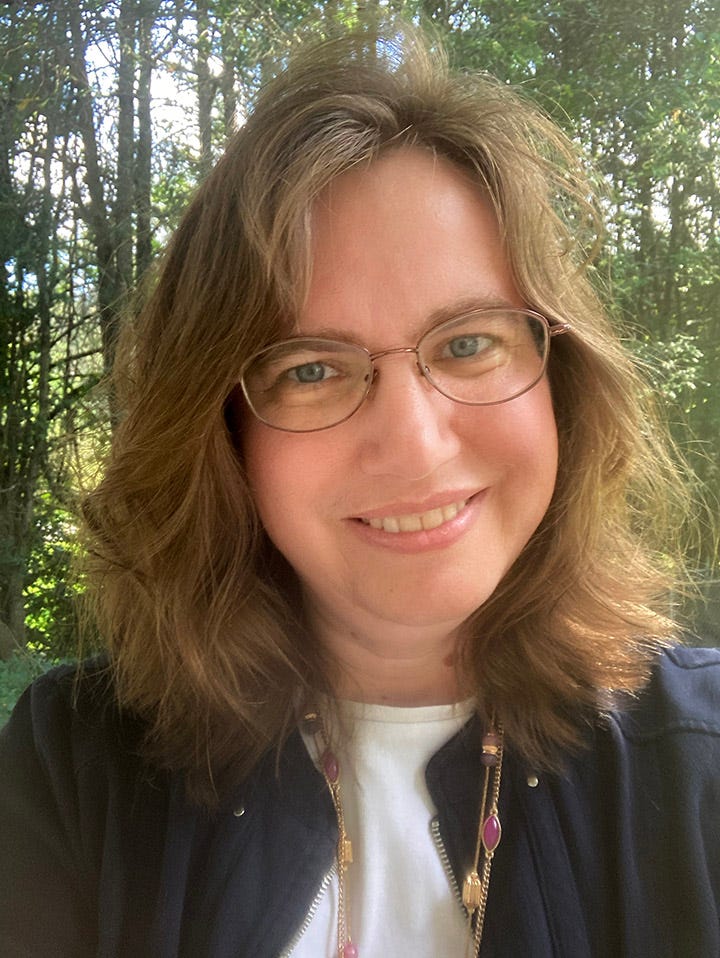
CAROLYN BENNETT FRAISER is the author of several educational books for children including MOON TREE (2022), M IS FOR MASON JAR (2025), and FIRE SEEDS (coming in 2028). Connect with her on social media @CarolynBFraiser or visit her website at CarolynBFraiser.com.
Thank you for sharing this. It was a great time for me to hear it!
Oh, my goodness, Carolyn. What I wrote this AM in my Morning Pages mirrors what you are sharing with us today! I am consciously taking a break from 2 PB projects that are going through revision AGAIN.
I am at that frustration point. So I'm picking up some watercolor brushes (I have no idea how to control the water flow from them...), and viewing a few tutorials before I make a beginner's mess. I cautioned myself to consider the time I spend learning to control watercolors as a good way to look at creative processes in general. I know this will in time fuel and feed my writing habits, too. I'll show you what happens in about two weeks.
I'm printing off your affirmation that every minute spent even on what might seem minute flows in to and informs the final piece! TY.